
You’ve done this before. You had the appointment in your calendar. You knew it was coming. You even thought about it yesterday. And yet somehow — somehow — you’re standing in your kitchen at 2:47 PM for a 3:00 PM meeting across town, looking for your keys, wondering if you need your laptop, and realizing you never looked up where to park.
You’re not lazy. You’re not disorganized. You’re experiencing something psychologists have studied for decades, and it has a name.
Actually, it has several names.
The Preparation Gap
There’s a space between knowing about an event and being ready for it. Most people treat these as the same thing. They are not even close.
Knowing your dentist appointment is Thursday at 2 PM does not mean you’ve thought about which insurance card to bring. It doesn’t mean you’ve looked up the address. It doesn’t mean you know when to leave your house, factoring in the construction on Oak Street and the fact that their parking lot is always full.
Knowing is passive. Preparing is active. And between those two states sits a gap that almost everyone falls into, almost every time.
The gap between knowing something is coming and actually being ready for it is where most of daily life quietly falls apart.
This isn’t a character flaw. It’s a design flaw — in how we think about upcoming events, and in every tool we’ve built to manage them. Your calendar tells you when. Nothing tells you what you need to do before then.
The Science: Three Cognitive Biases Working Against You
1. The Planning Fallacy
In 1979, psychologists Daniel Kahneman and Amos Tversky identified something they called the planning fallacy: humans consistently underestimate the time, costs, and risks of future actions while overestimating their benefits. Not sometimes. Consistently. Even when they have direct experience with similar tasks taking longer than expected.
This is why you think getting ready for a dinner party will take 20 minutes when it always takes 45. Why you think you can “quickly” pack for a trip in the morning when last time it took two hours. Why you believe, every single time, that future-you will handle it.
The planning fallacy isn’t about being bad at math. It’s about being human. Your brain constructs a best-case scenario by default. When you imagine tomorrow’s meeting, you picture yourself walking in calmly with everything you need. You don’t picture the 12 minutes spent looking for the presentation on your laptop, or the detour because the usual route is closed, or the fact that you forgot to charge your headphones.
Research published in the Journal of Experimental Social Psychology found that even when people were explicitly told to consider worst-case scenarios, they still underestimated completion times by an average of 30%. Your brain is wired to be optimistic about future tasks. It’s a feature, not a bug — but it means you need external systems to compensate.
2. Optimism Bias
Related to the planning fallacy but broader: optimism bias is the tendency to believe that you are less likely to experience negative events than other people. You know, intellectually, that traffic exists. You’ve been stuck in it hundreds of times. But when you’re planning tomorrow’s commute to the airport, your brain quietly assumes tomorrow will be different. Tomorrow the roads will be clear. Tomorrow you’ll find parking immediately. Tomorrow everything will go smoothly.
Tali Sharot, a neuroscientist at University College London, has shown that optimism bias persists even in people who are fully aware of it. Knowing about the bias doesn’t fix it. This is important: you cannot think your way out of being unprepared. You need structural solutions — things that happen automatically, before your optimistic brain has a chance to convince you that everything will be fine.
3. The Zeigarnik Effect (Working in Reverse)
The Zeigarnik effect, discovered by Lithuanian psychologist Bluma Zeigarnik in the 1920s, describes how uncompleted tasks occupy your working memory more than completed ones. Your brain keeps pinging you about things left undone.
But here’s the twist: research by professors E.J. Masicampo and Roy Baumeister at Florida State University found that simply making a plan to complete a task was enough to quiet the Zeigarnik effect — even if you hadn’t actually done the task yet. Your brain treats “I have a plan for this” the same as “I’ve done this.”
This is exactly why you feel calm after putting an event in your calendar. Your brain checks the box: handled. Except it hasn’t been handled. It’s been recorded. The preparation — the actual work of getting ready — hasn’t happened. But your brain has already moved on.
This is why people with impeccable calendars still show up unprepared. The act of scheduling tricks your mind into thinking the hard part is done.
What “Prepared” Actually Means
Let’s be specific about what preparation involves for a regular Thursday afternoon.
You have a dentist appointment at 3 PM. What does “being prepared” actually require?
Information gathering:
- Do you know the exact address? (Not “somewhere on Main Street” — the actual building.)
- Do you know where to park? Is there a lot, or do you need street parking?
- Do you need to bring your insurance card? Which one? Where is it?
Logistics:
- How long does it take to drive there? Right now? At 2:30 PM on a Thursday? (Those are different numbers.)
- Do you need to leave the house at 2:15 or 2:30? What’s the latest you can leave without being stressed?
- Is there anything you need to do before leaving? Move the car? Let the dog out? Close the laptop properly for a meeting later?
Mental readiness:
- Is there anything you wanted to ask the dentist? That thing about the sensitivity on the left side?
- Did they ask you to come with clean teeth? (When did you last brush?)
- Have you eaten? Can you eat after? Are you going to be starving by 5 PM?
That’s a dentist appointment. One of the simplest possible events. Now multiply this by a job interview. A cross-country flight. A wedding you’re attending. A first date. A parent-teacher conference.
Every event has a preparation surface — the set of things you need to know, gather, or do before you walk out the door. Most people don’t think about any of it until they’re literally walking out the door. And then the window has closed — all that’s left is improvisation.
Most events don’t go wrong during the event. They go wrong in the 45 minutes before it, when you realize you haven’t thought through what you actually need.
Why Your Calendar Can’t Fix This
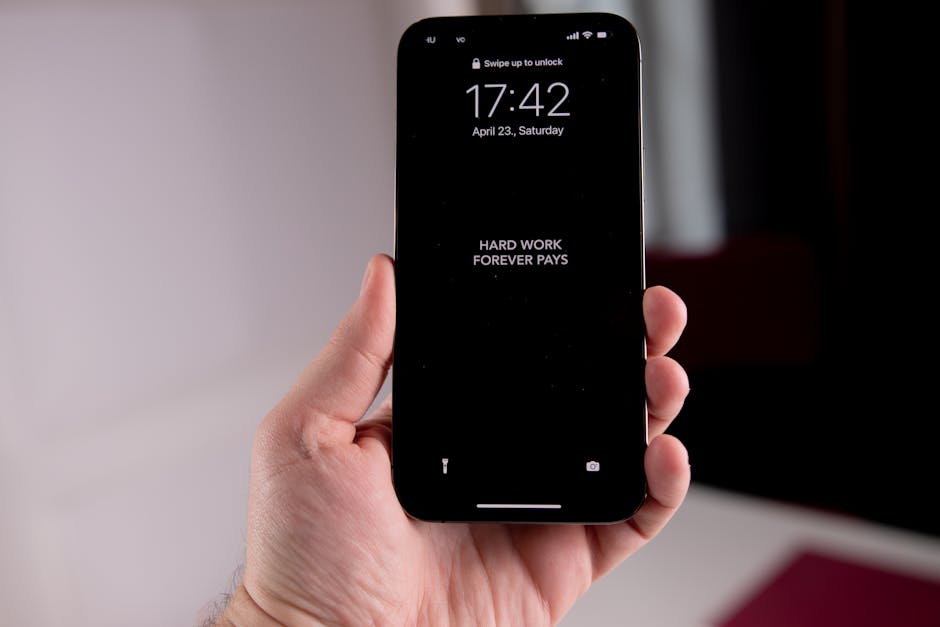
Open your calendar right now. Look at tomorrow’s events. For each one, you’ll see a title and a time. Maybe a location. That’s it.
Your calendar is a record-keeping system. It answers one question: “What’s happening when?” It does not answer:
- “What do I need to bring?”
- “When should I start getting ready?”
- “What could go wrong if I don’t prepare?”
- “What’s the one thing I’ll forget if I don’t write it down right now?”
And the single reminder your calendar gives you — that 15-minute ping — assumes you’re already prepared and just need a heads-up. It doesn’t help you prepare. It just tells you that the thing you haven’t prepared for is about to happen.
This is why people who are meticulous about their calendars still forget appointments and show up flustered. The tool they’re relying on was never designed to solve the actual problem.
The Preparation Window
Here’s a framework that actually works, based on how events really unfold:
The Awareness Phase (7+ Days Out)
Your only job here is to know the event exists and let it quietly percolate. No action required. No preparation. Just a gentle fact sitting in your peripheral awareness: “Friend’s birthday party next Saturday.”
This phase matters because it gives your subconscious time to work. Ideas surface naturally — “Oh, I should get a gift” — when you’re not forcing them. The worst thing you can do in this phase is try to plan everything immediately (you don’t have enough context yet) or ignore it entirely (and get blindsided later).
The Action Phase (2-7 Days Out)
Now preparation begins. This is when you answer the real questions:
- What do I need to bring? Buy? Arrange?
- Are there any logistics I should figure out now, while I have time?
- Is there anything that requires another person’s input? (These things always take longer than you think.)
The action phase is where most preparation systems break down. Your calendar doesn’t prompt you. Your brain has already filed the event as “handled” (thanks, Zeigarnik). Unless something external nudges you into action — a human reminder, an app notification, a sticky note on your monitor — the action phase doesn’t happen.
The Logistics Phase (24 Hours Out)
Travel time. Parking. Weather. What to wear. When to leave. What to grab on the way out the door. Whether the car has gas. Whether your phone is charged.
These seem trivial, but they’re the difference between arriving calm and arriving frazzled. The logistics phase is where the planning fallacy hits hardest — you underestimate every single one of these micro-tasks, and they compound.
The Departure Phase (1-2 Hours Out)
This is execution. You know what you need. You know when to leave. The only question is: will you actually leave on time?
Most people lose here because they start “one more thing” — one more email, one more episode, one more task — and suddenly they’re 10 minutes past when they should have walked out the door. They weren’t procrastinating. They just didn’t have a clear signal that said “now.”
What Actually Fixes This
If you’ve read this far, you might recognize a pattern: every failure point is a systems failure, not a character failure. You don’t need more discipline. You need better infrastructure.
1. Externalize Your Preparation
Don’t try to hold preparation steps in your head. Your working memory has maybe four slots, and three of them are occupied by whatever you were thinking about before you remembered the event exists.
Write down what you need for an event the moment the event enters your calendar. Not later. Not “when I have time.” Now. Even three bullet points — the insurance card, the parking situation, that question for the dentist — transforms an abstract calendar entry into a concrete action plan.
If you use a tool that auto-generates this list for you, even better. Removing the cognitive load of figuring out what to prepare is half the battle.
2. Build In Time Buffers (And Actually Honor Them)
The research is clear: you will underestimate how long things take. Always. So build in padding structurally, not as a suggestion to yourself.
If Google Maps says it takes 18 minutes to drive somewhere, plan for 30. This isn’t pessimism — it’s accuracy. You’re not accounting for finding your keys, getting to the car, finding parking at the other end, and walking from the parking lot to the door. Those “invisible minutes” add up to 10-15 minutes every single time.
Planning for the best case means experiencing the worst case. Planning for the realistic case means arriving calm.
3. Graduated Reminders, Not a Single Ping
A single reminder 15 minutes before an event is nearly useless for preparation. By then, the moment has passed — you can only react.
What you need is a sequence: a gentle awareness days out, a practical nudge the day before, and a departure signal the day of. This is how prepared people actually operate — they have multiple touchpoints with each event, not one. The difference is that most prepared people do this mentally (they’re the type who “just naturally think ahead”), while the rest of us need a system that does it for us.
Graduated reminders that shift from awareness to action to departure are the closest thing to having a naturally organized friend quietly tap you on the shoulder at exactly the right moments.
4. Capture Immediately, in Whatever Form
The moment between “I need to remember this” and “I’ll add it to my calendar later” is where most preparation collapses. Later never comes. Or it comes, and you’ve forgotten the detail — the address the host texted you, the thing you were supposed to bring, the time change they mentioned.
Capture by voice if your hands are full. Screenshot if someone texted you the details. Type it if you’re at your desk. The format doesn’t matter. The speed does. Every second between the thought and the capture is a chance for your brain to say “I’ll remember” — and it won’t.
5. Know When to Leave, Not Just When It Starts
“Meeting at 3 PM” is incomplete information. The useful information is: “Leave at 2:22 PM.” But calculating that requires knowing the travel time from your current location, right now, accounting for current traffic. Nobody does this math every time. They wing it, and they’re routinely surprised when it takes longer than they assumed.
Departure tracking that calculates travel time from where you actually are, adds buffer, and tells you when to walk out the door is the single most underrated feature a planning tool can offer. It converts “I should probably leave soon” into “leave in 8 minutes.”

The Compound Effect of Showing Up Ready
Here’s what most people don’t realize about preparation: the benefit isn’t just avoiding the bad thing (arriving rushed, being flustered, forgetting something). The benefit is the feeling of arriving ready.
When you walk into a meeting having reviewed the agenda, you participate differently. When you arrive at the airport with your boarding pass accessible, your passport in your hand, and your gate number memorized, the experience of flying transforms from stressful to almost pleasant. When you show up to a friend’s dinner party with the bottle of wine you remembered to buy yesterday, you feel like a person who has their life together.
You might not actually have your life together. Nobody does. But the feeling of readiness changes how you move through every event. It changes how people perceive you. It changes your own relationship with time.
And it’s not about being a naturally organized person. It’s about having systems that do the organizing for you — quietly, calmly, without making you feel guilty about the fact that your brain doesn’t do this automatically.
Because here’s the truth: most brains don’t do this automatically. The planning fallacy affects everyone. Optimism bias affects everyone. The Zeigarnik effect tricks everyone. The people who show up prepared didn’t overcome human nature. They just built better systems around it.
Start Small
You don’t need to overhaul your entire life. Pick one event this week — the most important one. Before it happens, spend three minutes answering three questions:
- What do I need to bring or know?
- When do I actually need to leave to arrive calm?
- Is there one thing I’ll definitely forget if I don’t write it down right now?
That’s it. Three questions, three minutes. If you do this for one event, you’ll feel the difference. And if you want a tool that does this thinking for you — automatically, for every event — Composed was built for exactly this problem. You tell it what’s coming up, and it figures out the rest: what to prepare, when to prepare it, and when to leave.
Not because you’re lazy. Because your brain was never designed to hold all of this. And it shouldn’t have to.